Love's Labor Rewarded
Partner and I just binged HBO’s The Pitt in advance of its season 2 premier which dropped last week. For anyone unfamiliar, The Pitt follows the intrepid staff of an urban Pittsburgh ER, led by Dr. Noah Wyle M.D.T.V., as they spend a grueling 15 hours dealing with the best and worst of modern America. The hype around this show has steadily built over the last year and I will offer up front it is all well deserved. Those of us of a certain age (GENX-4-EVA) grew up watching a fresh-faced Dr. Wyle as he navigated the dramatic start of his long career at a Chicago ER. Reconnecting with the grizzled veteran at this point in his life as well as my own makes watching a very different experience than the first time around.
I don’t think I’ve watched a medical drama since I stopped watching E.R. deep into its (too) long run. I enjoyed House M.D., but I don’t really consider that to be a medical drama as much as a drama about a maniacal narcissist practicing medicine. The reviews of The Pitt suggested they had captured the magic of E.R. And I will wholeheartedly agree with that assessment. They’ve actually gone one step better with the real-time conceit of following the staff over the course of a single shift. For anyone who has spent the better part of a day dealing with an ER visit the verisimilitude of the dramatic device here creates a welcome depth of character and dramatic tension. The story of the middle-aged brother and sister dealing with their dying, elderly father is a perfect example of one that benefits from the show’s structure.
Over the course of literal hours we watch as these siblings face their father’s impending death with varying degrees of acceptance and denial. The man has an advanced directive making it clear he does not want intrusive end of life measures, but that document gets overruled by the medical power of attorney that is shared equally between the siblings. One wishes to let the father go out on the terms he put into writing while the other is unwilling to say goodbye just yet. It initially lands as a selfish act, but we ultimately learn it is driven by a deep-seated longing for missed emotional connection that so many can relate to in the complicated world of family. Dr. Wyle expresses beautiful thoughts about the four things to say to a dying loved one and creates the space for the sibling to express the pain leading them to grasp for more time:
I love you.
Thank you.
I forgive you.
Please forgive me.
This was the first time The Pitt wrecked me emotionally in a way that was impossible for E.R. to ever accomplish. It has nothing to do with that show, but rather the person who was watching it. In the 90’s I was a young adult with a lot of great stuff happening in my life who had not experienced anything in the way of trauma. I’d dealt with hardship for sure, but nothing that would benefit from therapy. 30 years later I’ve seen some shit and have the therapy bills to prove it. I’m also a grizzled veteran who can feel in my bones the weariness that Dr. Wyle expresses so well with his eyes. That scene with the family surrounded by the incongruously happy art for pediatric patients brought me back to my mother’s bedside in those last 48 hours before she passed from an aggressive albeit blessedly short course of ALS.
I had never heard of the four messages that were shared here, but I’m grateful to learn about their importance as my last hours with my mother were spent spontaneously expressing them. Well three out of the four as I had no reason to forgive my mother for anything. She was far from perfect, but there is not a single thing I could point to that would rise to the level of requiring forgiveness. She might have felt otherwise, but she had been non-verbal for days at that stage of hospice. Her mind was still present in that failing flesh and it was obvious she could understand my words, but it was a one-way conversation between a mother who loved to talk and a son apologizing for too often being far more taciturn in response.
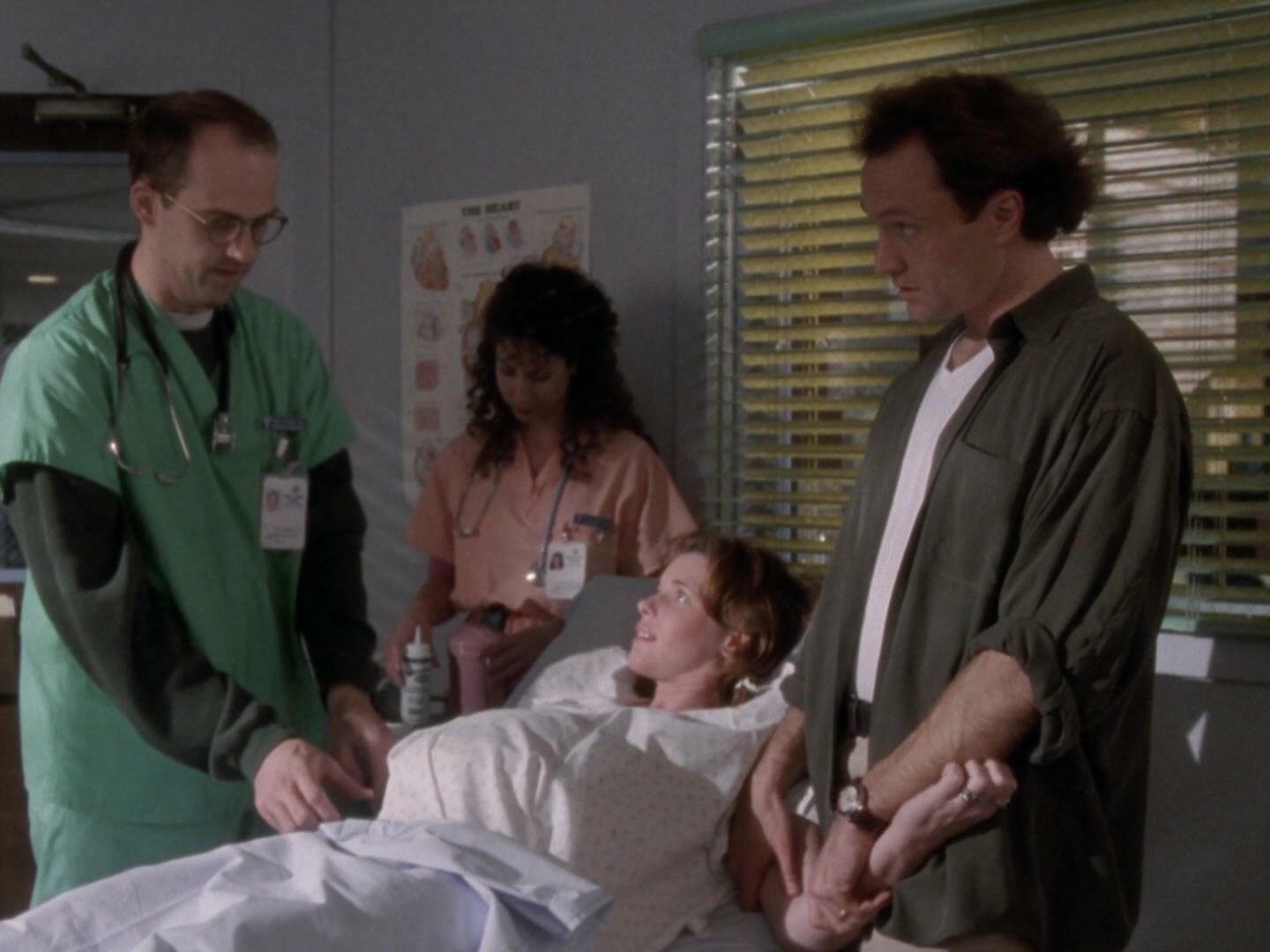
As emotional as that story line proved to be for me, it doesn’t hold a candle to the one that truly destroyed me. In the back half of the season we meet a young woman who is giving birth to a baby she carried as a surrogate for her best friend and his husband. I felt my heart rate increase as soon as the case started rolling because my mind instantly flashed back to perhaps the most harrowing birth sequence in television history.
Love’s Labor Lost was a first season episode of E.R. that followed a young couple’s horrifying birth journey and is considered by many to be that show’s finest hour. I agree with that assessment, though I haven’t revisited the episode in many years as it became far too hard to watch after I watched my youngest child spend his first 10 minutes outside the womb pulseless with his tiny gray body subjected to the unforgettable violence of chest compressions.
The Pitt took a different path for its maternity patient and it far more closely mirrored the storyline of my own experience. I’ve already found myself on the verge of tears a few times writing today and I don’t want to push myself over the edge so I will not be recounting anything more. Let me just say the writers grabbed me so viscerally my watch expressed concern about my heart rate. Unlike the loss in that episode of E.R., the Pitt’s birth story finished on a far more rewarding note which thankfully also mirrors my own life.
Rewarding is how I will describe my conclusion about The Pitt’s first season. It can be laugh out loud funny even when it’s forcing the squeamish (like me) to cover their eyes and overall was a piece of entertainment that gave me exactly the emotional journey and competence porn I was looking for from masters of the craft. I will definitely be refilling a prescription to spend another 15 hours with Dr. Wyle.